

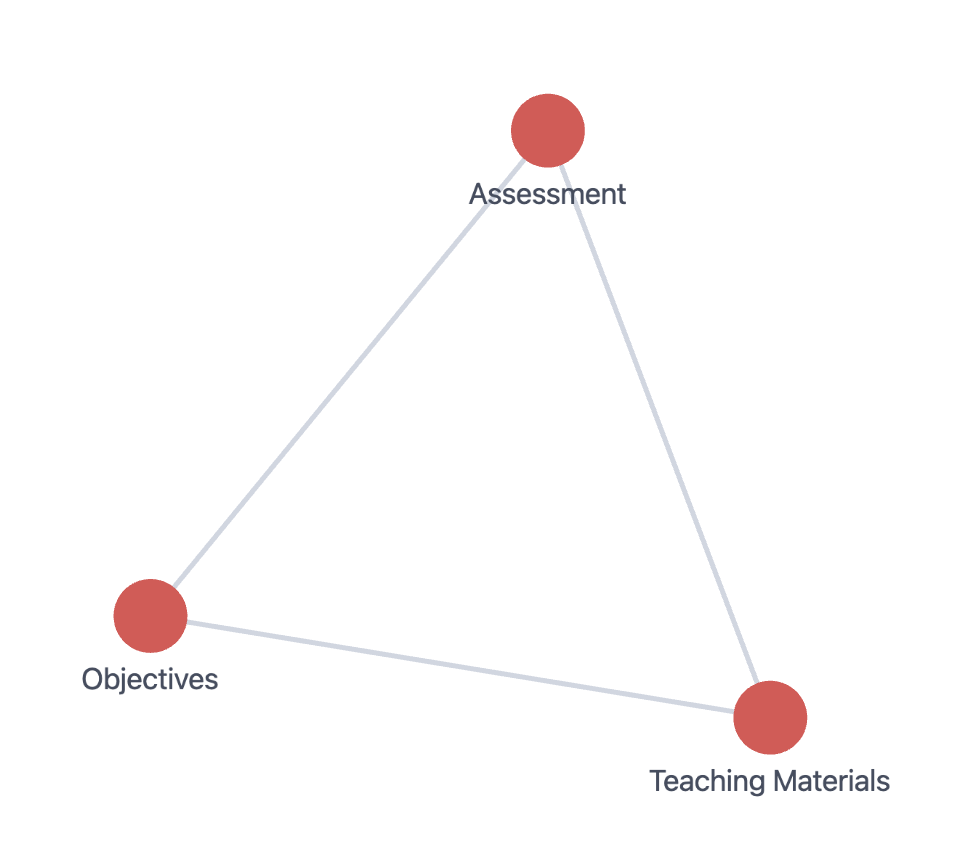
In a road map, there is more to the map than just cities connected by roads. There are natural elements of the landscape (e.g. trees, rivers, mountains, etc.); there are businesses, points of interest (e.g. museums, airports, cemeteries, bus stops) and locations that you may not have plans to visit. Similarly, there is more potential to curriculum maps (CM) than mapping just the objectives, assessments, and teaching materials of a course or program. Most of the literature on CM focuses on their use for aligning these three elements of curriculum, which makes sense considering the interest in backward design and the accreditation process.
However, as Zohrabi (2008) points out, there are numerous elements of curriculum that might be worthwhile to consider in course design.
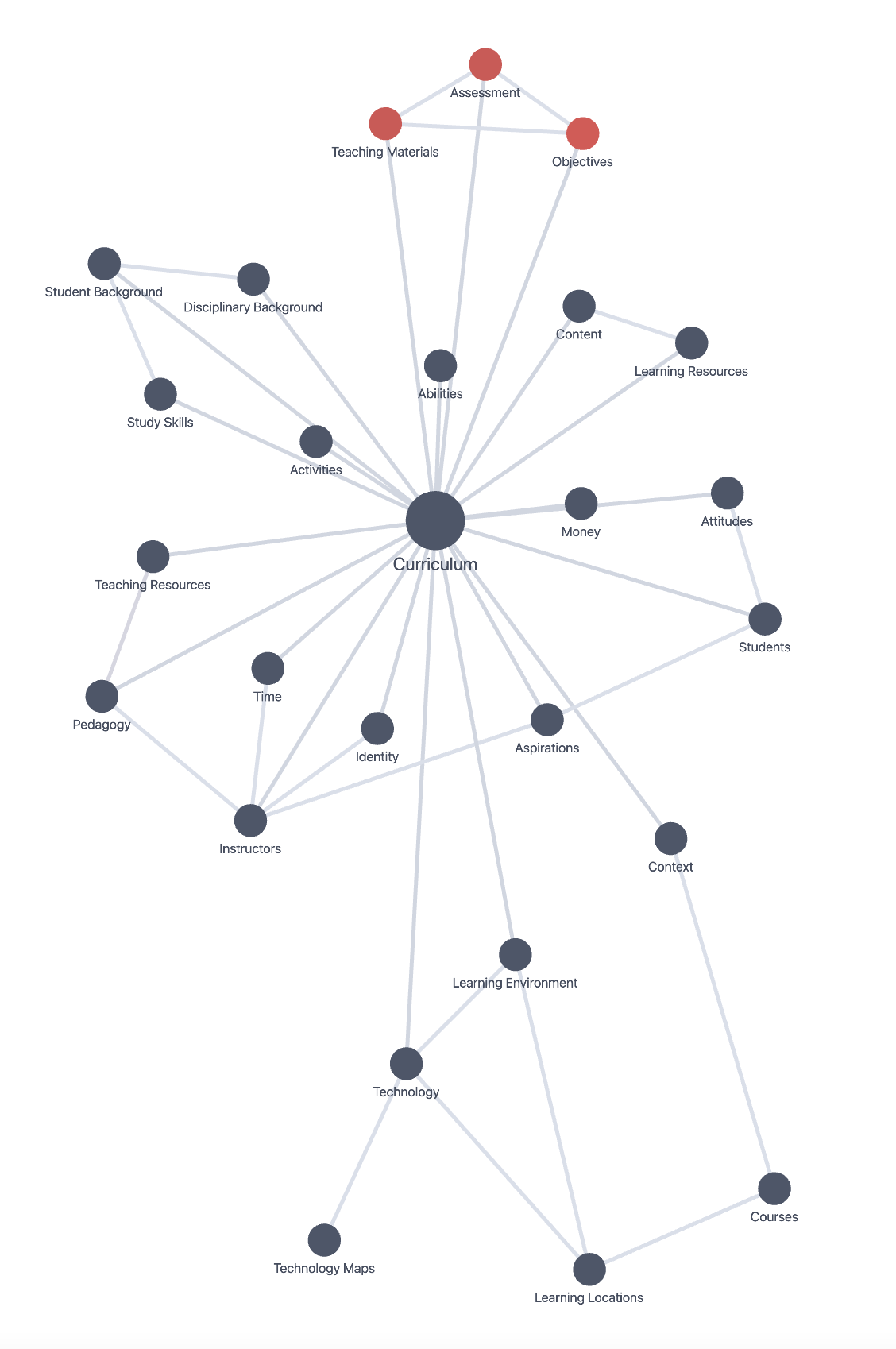
Expanding this list of components also broadens out the reasons for mapping. Similar to adding additional elements to a geographic map allows you to estimate time, altitude, and local environment. Having additional CM elements allows you to expand past two of the main uses of mapping: improved performance of students and coherence of what is being taught and assessed. Harden (2001), in one of the foundational articles on CM, outlines many uses for the traditional CM beyond performance, communication, and coherence. However this expansion of uses still frames the map as still containing objectives, assessments, and teaching materials. Extending the elements that are mapped also extends the usefulness of the maps for other purposes such as self-reflection and community building. You can find these last two in the CM literature around objectives, assessments, and teaching materials, but I would argue that the bar to engage faculty in these alignment conversations is high. Faculty have to be familiar with educational jargon and spreadsheets in addition to the challenges of having faculty be vulnerable and share their intellectual property and identity with peers and evaluators. Would it not be useful for faculty to map, for instance, the technology they use against the cost of those technologies? Compare this to the impact of the technologies on student grades and might you have an interesting signal to understand how your choices might be impacting students of lower socio-economic status?
Can expanding CM elements and mapping techniques help to build more reflective faculty? Would you be more likely to use a geographical map if you were exploring possible travel plans, as opposed to planning a trip for hundreds of people that you will be evaluated on?
References
Harden, Ronald, M. “AMEE Guide No. 21: Curriculum mapping: a tool for transparent and authentic teaching and learning.” Medical teacher 23.2 (2001): 123-137.
Zohrabi, Mohammad. “Researching into Curriculum Components.” Journal of Pan-Pacific Association of Applied Linguistics 12.2 (2008): 49-69.
